I have just come back from a one-week holiday in Lanzarote, in the Canary Islands. This is not a travel blog so I won’t elaborate much on my trip; my goal for this entry is to shed light on the confusing names of the territories you can find in the islands.
The Canary Islands administrative names
First, let’s clarify the administrative division of the Spanish territory. At the top we find the state (Spain), followed by what we call autonomic communities like Andalusia, Catalonia or Galicia. The next divisions are the provinces, like Almería and Seville, being part of Andalusia, or Lerida or Barcelona, part of Catalonia. The smallest division is the council. For example, I live in Roquetas de Mar (council), belonging to the Almería province.
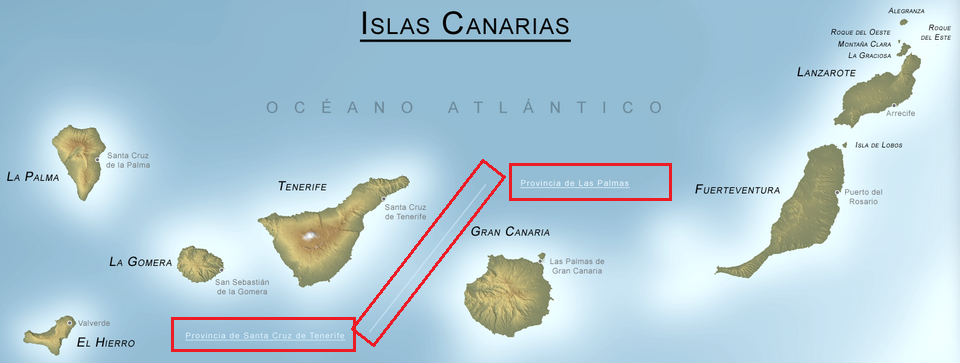
Back to the Canary Islands, the archipelago itself is an autonomous community of two provinces: Santa Cruz de Tenerife and Las Palmas. This is sometimes represented on the map by a diagonal line splitting the islands into two groups
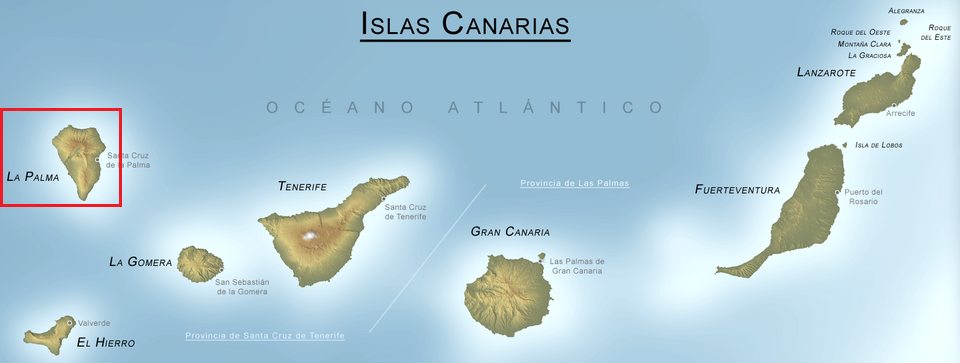
La Palma island is located at the north-western side and known for the 2021 eruption of the Cumbre Vieja volcano. Its capital city goes by the name Santa Cruz de la Palma. Well, this island DOES NOT BELONG to Las Palmas province, but to Santa Cruz de Tenerife.
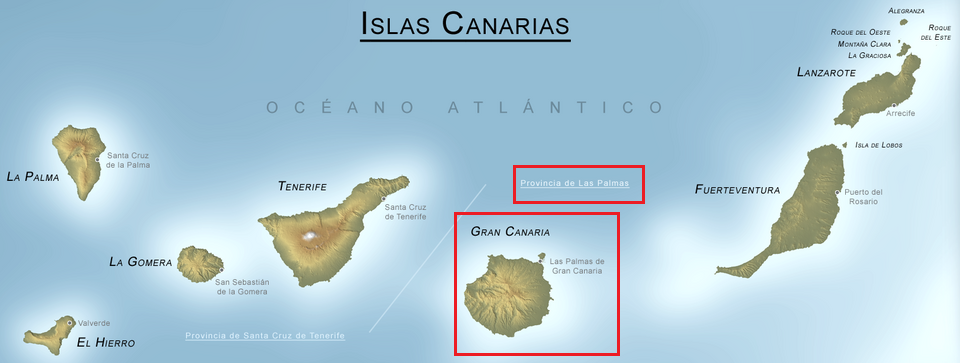
Gran Canaria (translated to Great Canary Island) island is the third biggest and its capital, the most populated city of the archipelago, goes by the name Las Palmas de Gran Canaria. This island does belong to Las Palmas province. This is somewhat confusing because the city name can be shortened to Las Palmas, so you need context to tell apart whether the speaker refers to the city or the province.
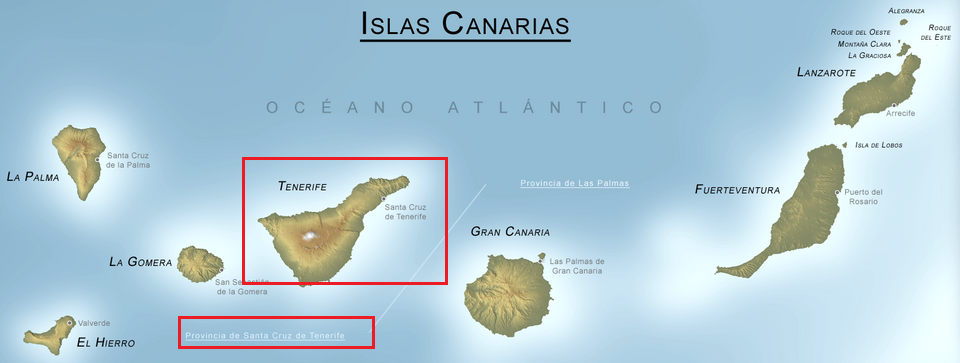
Tenerife is the biggest island by surface. The tallest point of Spain is located here in The Teide mountain with its summit at 3715 meters. Its capital city is Santa Cruz de Tenerife that goes by the same name as the province. Its second most populated city goes by the name Puerto de la Cruz
A few notes about my trip to Lanzarote
This is my second trip to Lanzarote; the first one I made in 1990. 36 years ago.
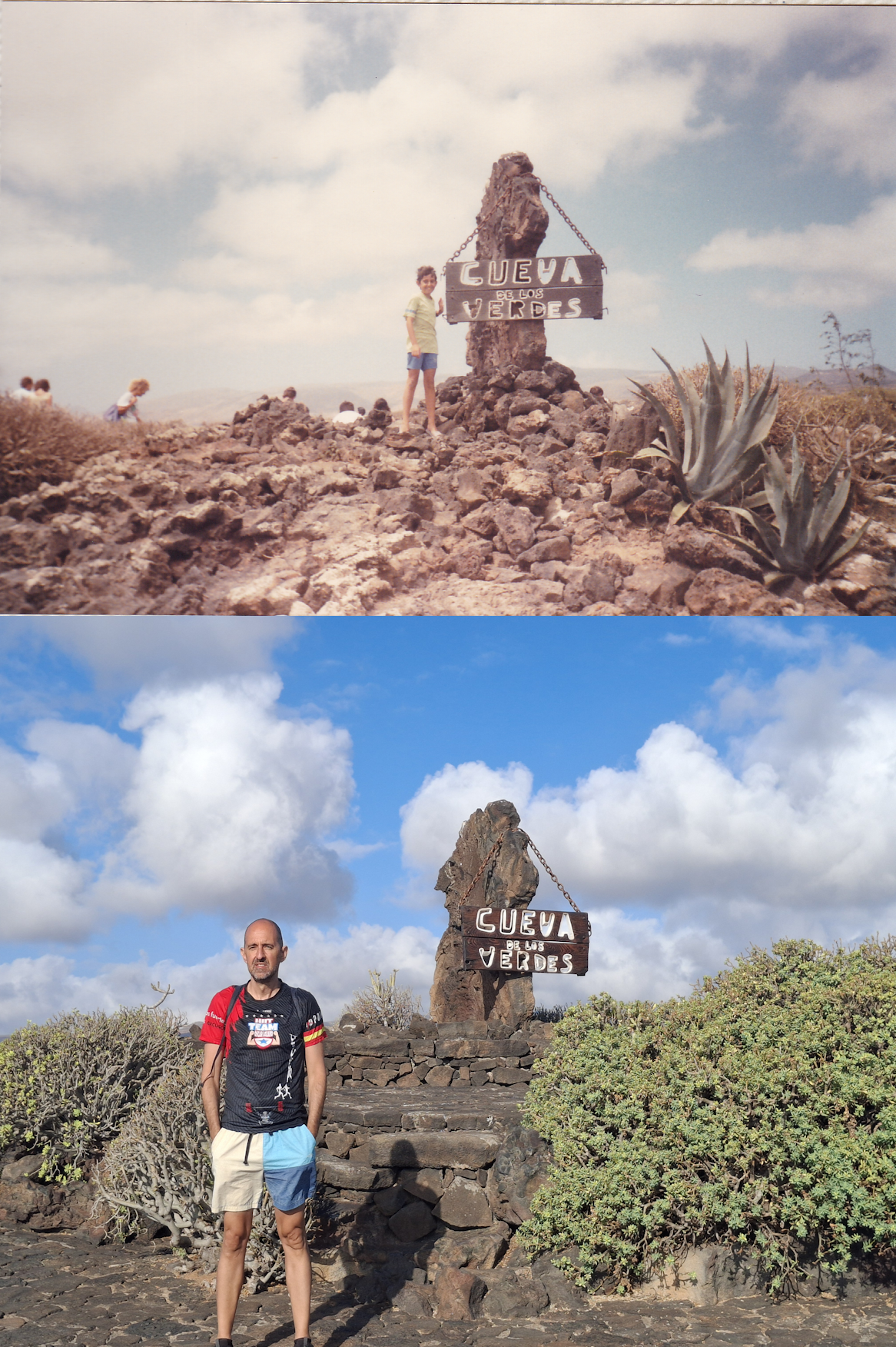
I’ve spent a week discovering Lanzarote. This is the oldest island, known for its volcanic landscapes. Its weather is mild like in the rest of the archipelago, but due to its low terrain, it does not enjoy enough rainfall, so vegetation is sparse. Although this made for very harsh living conditions in the past now we can enjoy a moon- or Mars-like landscape without the vegetation breaking the illusion.
We’ve followed the following guide (in spanish) She has also built a Google Maps with the most important spots pinned, colour-coded for each day of the 7 days visit.
Unlike the author of the shared blog, I do recommend the bus trip through the Montaña de Fuego. It’s a bit expensive compared to what’s asked for other amenities on the island, but the track was designed by César Manrique himself, and they’ve upgraded the bus having huge clean windows that allow for a clear view of the landscapes. Indeed, you’re not allowed to leave the bus at any moment, but I recommend it nonetheless.
I want to make a remark on tourism and conservation. One of my favourite visit was walking the Tremesana route. This track is not open for the general public as it goes through a restricted part of the national park. The guide craftly explains the origins of the park and the volcano explosions and you travel in time as you hear the history and see the remains in the awesome landscape. You need to book your place in advance and the number is very limited. Unless you put a serious effort on making the reservation, you are not likely to get a ticket. I could’ve never visit the place if not for my girlfriend who was stubborn on getting the tickets. She was prepared at 12:00 AM (Canary Islands time) and was able to get both tickets. And this gets me to my point on how the authorities should strike a good balance between conservation and tourism. I understand the place is fragile and also an important spot for scientific investigation. But in the end nature and the treasures of the country should be open for the laypeople. Of what use is keeping a treasure open only to a few of the elite? I think they should enable more places for this specific visit.
Anyway, there you got the link, just in case.
A stark contrast with the visit to the Cave of the Verdes in the opposite spectrum of over-tourism. One of the main visits of the island that gets a little spoiled by how professional it feels. You get with your car to a parking lot that is perfectly organized, then you get to the line according to your ticket time. The visit itself is quick, the guide knows his job and stays in every dependency barely enough time. To be honest, you get the feeling of being in a rush